
Archaeology and Historic Landscapes
A main statement that briefly introduces the contents of the page, a secondary header
Welcome to Archaeology & Historic Landscapes
Most planning applications and developments will not have a significant impact on archaeological remains. However, the Welsh Government recognises the potential threat to archaeological remains posed by development, and the desirability of preserving archaeological remains and their setting is a material consideration in determining a planning application.
The Historic Environment (Wales) Act 2023 (‘the 2023 Act’) came into force on 4 November 2024, and provides the framework for the protection and management of the Welsh historic environment. The new Act brings the principal legislation for the historic environment together in one place, and provides the law and its supporting documentation in fully bilingual form. Welsh Government policy relating to archaeological remains, planning and development control are laid out in:
There is always a presumption in favour of the physical preservation, in situ, of nationally important archaeological remains. However, the case for the preservation of archaeological remains is assessed on the individual merits of each case, taking into account all national policies, the archaeological policies in the Local Development Plan, and the intrinsic importance of the archaeological remains weighed against other factors, including the need for the proposed development.
If an archaeological site is of sufficient importance, and a proposed development will cause significant loss or damage to the archaeological remains and their setting, then it is possible that planning consent may be refused. However, this is a rare occurrence. More often, in cases involving remains of lesser importance, the presence of archaeological remains within a development area will require planning conditions that allow for the preservation of archaeological remains in-situ through careful design or the investigation and recording of archaeological remains on site followed by reporting and publication of the results to ensure that the remains are preserved by record.
In order to make fully informed and reasonable decisions, planning authorities need to be fully informed about the nature and importance of the archaeological remains and their setting, and the potential impact of the development upon them. In cases where the likely impact of any development on archaeological remains cannot be assessed, because there is insufficient evidence currently available to do so, applicants may be required to provide additional information on the likely archaeological implications of the development, by commissioning a Desk-Based Assessment or a Field Evaluation. Applicants may also be required to make provisions for reducing or removing the impact of the development on the archaeological remains.
Early consultation
Early consultation and discussions between the Bannau Brycheiniog National Park Authority and developers is very important in order to ensure that the needs of archaeology are taken fully into account as early as
possible in the development processes. An archaeological appraisal assessing whether archaeological remains are known to survive, or are likely to survive, at a particular development site, and the likely impact of the development upon them should always be included as part of a developers’ initial research into a site.

Positive planning
Positive planning and management can help to manage archaeological risk, ensure that any pre-application or pre-determination archaeological assessments required can be arranged, and bring about sensible solutions to the treatment of archaeological remains where there is a conflict between preservation and development.
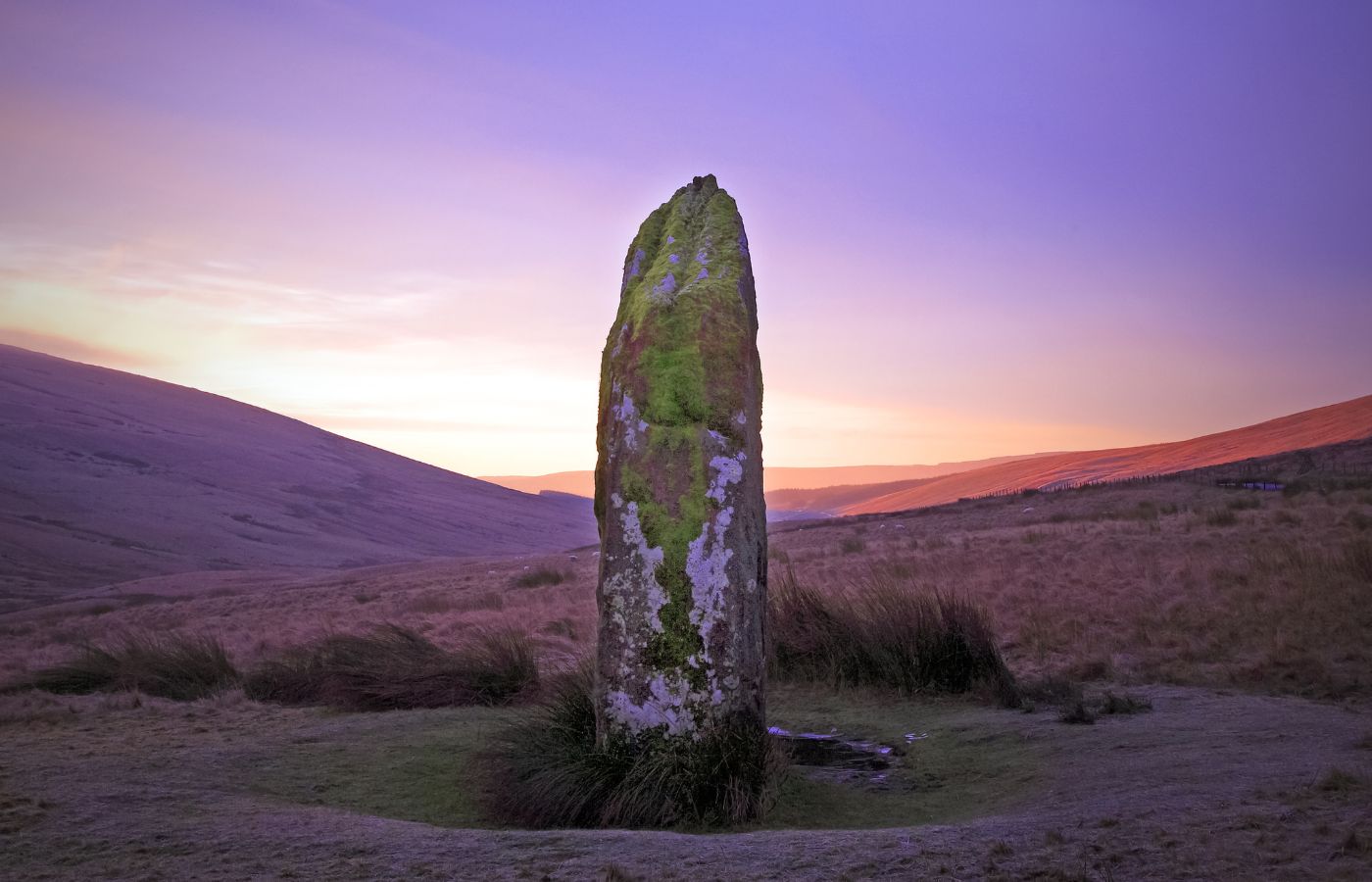
Development and Scheduled Ancient Monuments
Anyone wishing to undertake work that requires planning permission at an archaeological site designated as a Scheduled Ancient Monument will also need to obtain Scheduled Monument Consent. Planning permission alone is not sufficient to authorise such works. Scheduled Ancient Monument Consent is administered and granted by Cadw.
You can find more information about applying for Scheduled Ancient Monument Consent by visiting Cadw
Visit Cadw
Unexpected remains
From time to time, despite the best pre-application advice and research, archaeological remains may only come to light once development has begun. In such cases, if the archaeological remains are deemed to be of
national importance the remains may be scheduled and the development may need to cease. However, in most cases, where the remains discovered are not of national importance, discussion between the local planning authority and developer should be able to bring about sensible solutions to the treatment of archaeological remains.

Archaeological guidance and advice
The Bannau Brycheiniog National Park’s archaeologist is able to provide information and advice on:
-Whether a development is likely to affect a known heritage assets.
– Whether a developments lies within an area of archaeological potential.
– Appropriate mitigation measures.
The Bannau Brycheiniog National Park’s archaeologist also provides guidance in the form of a written brief for archaeological assessments and fieldwork, explaining what is required, for use as the basis for appointing a suitably qualified, and professional archaeologist to undertake the work.
