Conservation Areas
A main statement that briefly introduces the contents of the page, a secondary header
What is a Conservation Area?
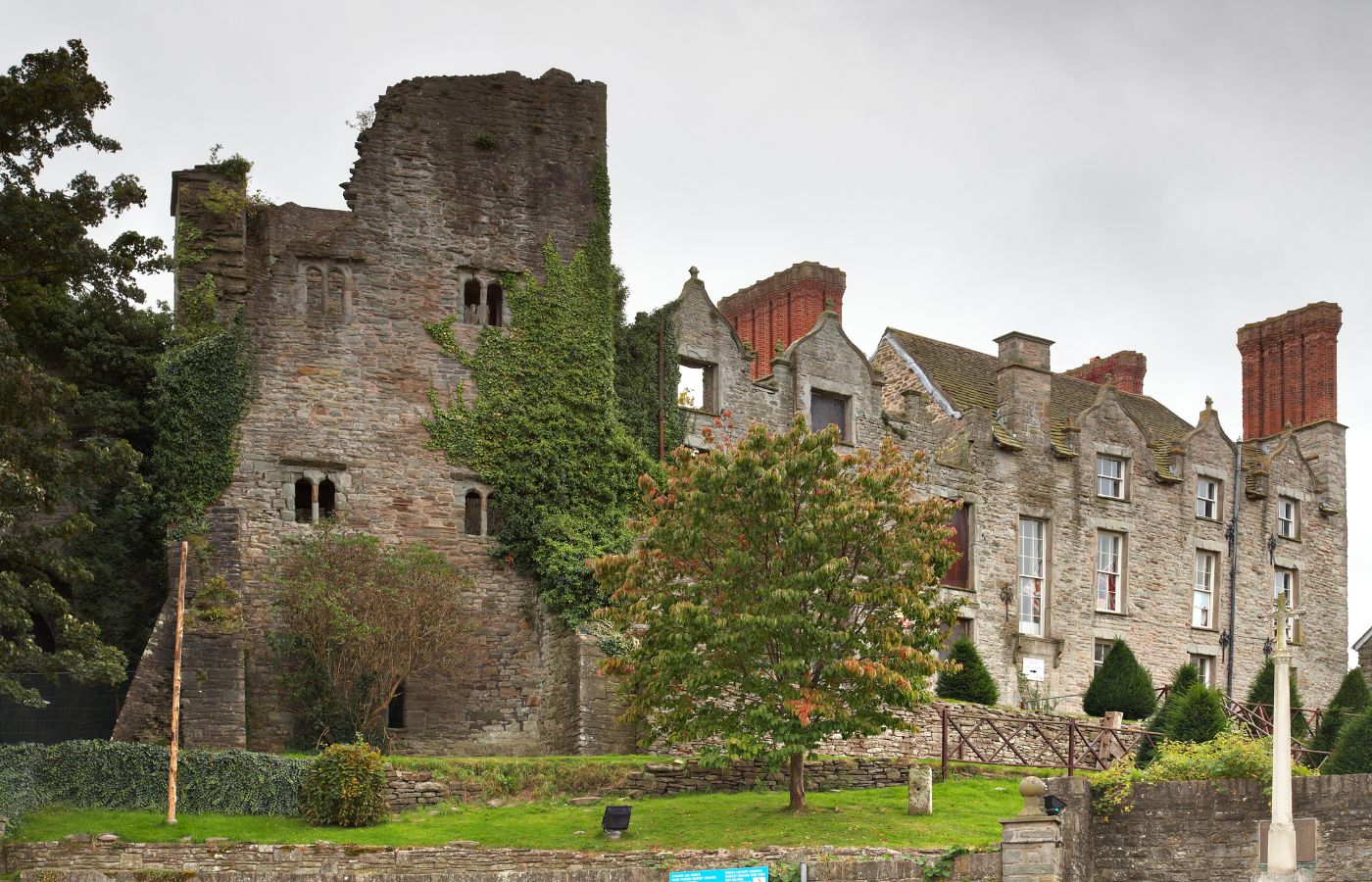
Conservation Areas are areas of special architectural or historic interest whose character or appearance it is desirable to preserve or enhance. National Park contains five Conservation Areas, in: Brecon, Crickhowell, Hay-on-Wye, Llangattock and Talgarth. Article 4[2] Directions apply to land and buildings within the Talgarth Conservation Area.
Frequently asked questions
When you bought your property the land search would have identified whether the property is within a cConservation aArea. Maps of the Conservation Areas within the National Park can be downloaded here: Brecon, Crickhowell, Hay-on-Wye, Llangattock and Talgarth.
Conservation Area boundaries are also shown on the following Government website: Conservation Area Boundaries | DataMapWales
You can also contact the BBNPA’s Heritage Team using the contact details below.
Senior Heritage Officer (Building Conservation)
Bannau Brycheiniog National Park
Phone: 01874 624 437
An Article 4[2] Direction means additional planning controls, over and above those applicable in all Conservation Areas, are in place within an area. Following consultation, an Article 4[2] Direction was confirmed in Talgarth in December 2016. Click here to download a copy of the official Confirmation Notice, which includes the full list of properties affected and an explanation of the classes of development property owners will need to seek planning permission for.
Local authorities have a legal duty to ‘preserve and enhance’ the character of Conservation Areas. To help achieve this, Planning Permission and/or Conservation Area Consent is required for some actions which may not be similarly controlled outside these areas.
- Conservation Area Consent is required for the total demolition of a building within a conservation area, if the building is over 115 cubic metres in size.
- Demolition of a wall fronting a highway over 1 metre in height will require Conservation Area Consent.
- Demolition of industrial buildings require Conservation Area Consent if the demolition is more that 50% of the volume of the building.
- It is unlikely that Conservation Area Consent will be approved for demolition of a building that does not include a suitable replacement scheme.
As the rules are complex it is always advisable to contact the Heritage (Building Conservation) or Development Control teams at the National Park Authority prior to carrying out works. This simple act could save you a lot of time and money.
- Erecting a satellite dish on an elevation that fronts onto the highway will require Planning Permission.
- Insertion of dormers, rooflights and fixing of solar power panels to front elevation roofs may also require Planning Permission.
- If you are unsure whether you require Conservation Area Consent, Planning Permission, or have any other queries please contact the Heritage (Building Conservation) or Development Control teams at the National Park Authority.
You will need to fill in a form to apply for consent and provide a number of additional pieces of information. This will include a Heritage Impact Statement. A full structural survey may be required to justify the loss of a significant building in a Conservation Area.
- For replacement buildings, a Conservation Area mini statement will need to be carried out as part of the design process. This will need to be included in a Design and Access Statement showing how the replacement design preserves or enhances the Conservation Area.
Applications can be made on-line via The Planning Portal.
There is no charge for a Conservation Area Consent application.
A Heritage Impact Statement for Conservation Area Consent must:
- a) describe the contribution to the character or appearance of the Conservation Area of the building to which the application relates,
- b) explain the objective that the works are intended to achieve and why they are desirable or necessary,
- c) include a summary of the options considered for the purpose of achieving the objective in sub-paragraph (b) and the reasons why the proposals to which the application relates are preferred,
- d) describe the works and the design principles which have been applied to them,
- e) include a schedule of works,
- f) describe how the works will affect the character or appearance of the Conservation Area, including an assessment of the impact of the works on the Conservation Area.
Guidance on preparing a Heritage Impact Statement is contained in the Cadw Document Heritage Impact Assessment in Wales. This is aimed principally at owners and occupiers of historic assets and their agents, but it will also guide the National Park Authority when considering applications for works to historic assets.
When the Authority considers whether to grant or to refuse an application, it must have special regard to the desirability of preserving or enhancing the Conservation aArea,, and those features which make it special. The Conservation Area Appraisals for each location will tell you more about these features, and are a good place to start when considering making changes to your property.
Technical Advice Note (TAN) 24 contains further information and advice on Conservation Areas and Conservation Area Consent.
Why is design important in Conservation Areas?
A high standard of design within Conservation Areas is important for maintaining the special qualities of the area; design that does not reflect the character of the Conservation Area, or building, will not normally be acceptable. Technical Advice Note (TAN) 12 contains more information and advice on good design.
A Design and Access Statement will be required to support planning applications in a Conservation Area for one or more dwellings, or where the creation of a floor space of 100 square metres (gross) or greater is proposed. Further guidance is available in Design and Access Statements in Wales.
Yes, trees in Conservation Areas are protected:
- A tree is protected if it measures 75mm diameter at 1.5m from ground level.
- If it is a multi-stemmed tree, then each stem must measure 75mm diameter at 1.5m from ground level.
If you wish to fell or carry out works to a tree in a Conservation Area you must provide 6 weeks notice to the National Park Authority. T. This notice is called a Section 211 and can be downloaded here.
You can find additional information about Tree Preservation Orders and Trees in Conservation Areas in the Bannau Brycheiniog National Park here.
Contact details
Senior Heritage Officer (Building Conservation)
Bannau Brycheiniog National Park
Phone: 01874 624 437
planning.enquiries@beacons-npa.gov.uk
Lorem ipsum
Slide 1
Slide 4
Slide 2