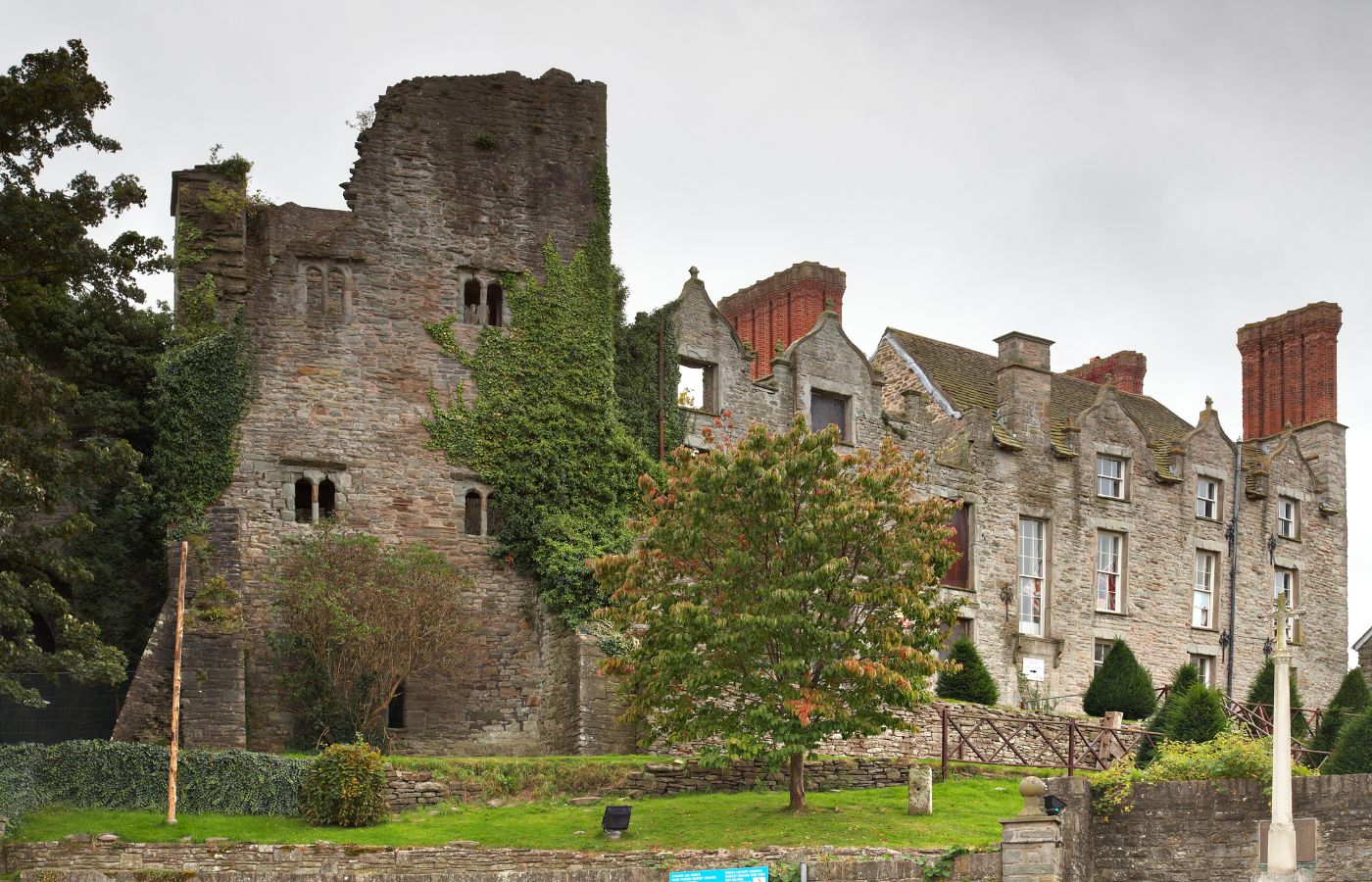
Listed buildings
Listed Buildings are buildings of special architectural or historic interest that are of national importance.
What is a Listed Building?
Listed Buildings are buildings of special architectural or historic interest that are of national importance. When a building is Listed, this status applies to the whole building: its exterior; its interior; any buildings within its curtilage and any fixtures and fittings or any structure fixed or attached to the building.
For a building to be Listed, it must be deemed important against particular criteria, such as:
- Its architectural interest – its architecture, design, layout, craftsmanship, materials and technologies used;
- Its historical interest – its links to aspects of national history;
- Its associative interest – its associations with important people or historical events;
- Its group value– its association with other buildings and structures.
The older a building is, the more likely it is to be listed. All buildings that survive in anything like their original form and were constructed before 1700 are likely to qualify for Listed status. However, any building of special architectural or historic interest, no matter what its age, can be considered for Listing.
Decisions about which building should be listed and the maintenance of the List of Buildings is a legal duty of the Welsh Government and is, in practice, administered by Cadw.
Frequently asked questions
There are 3 grades of listed buildings:
Grade I:
These are buildings that are internationally important and are of exceptional architectural or historic interest. Only 2% of all Listed Buildings in Wales are Grade I.
Grade II*:
These are buildings that are of more than special architectural or historic interest. Only 7% of Listed Buildings in Wales are Grade II*.
Grade II:
These are nationally important buildings of special architectural or historic interest. The vast majority of Listed Buildings in Wales are Grade II.
The Historic Environment (Wales) Act 2023 (‘the 2023 Act’) came into force on 4 November 2024, and provides the framework for the protection and management of the Welsh historic environment. It repealed the following legislation in Wales:
- The Historic Buildings and Monuments Act 1953
- The Ancient Monuments and Archaeological Areas Act 1979
- The Planning (Listed Buildings and Conservation Areas) Act 1990
- The Historic Environment (Wales) Act 2016
A suite of regulations supporting The 2023 Act also came into force on 4 November 2024. These include:
- The Listed Buildings (Exempt Religious Buildings) (Wales) Regulations 2024
- The Listed Buildings (Partnership Agreements) (Wales) Regulations 2024
- The Listed Buildings and Conservation Areas (Procedure and Interest Rate) (Wales) Regulations 2024”
Cadw maintains a record of all Listed Buildings in Wales, which can be searched here. If you are unsure whether your property is Listed, please contact the Bannau Brycheiniog National Park’s Heritage (Building Conservation) team on the details below.
Any works which will impact on the character of a Listed Building or any features of special architectural or historic interest, or involve loss of fabric, f are likely to require Listed Building Consent. Even something as minor as replacing a window or inserting a new flue may require Consent.
General maintenance or repair carried out in a ‘like for like’ manner (that means using identical materials and design) may not require consent. It is best to check with the National Park Authority first, as it is a criminal offence to carry out any works which would have required consent, without first gaining that consent.
As the law is complex, if you are in any doubt as to whether the works you intend require consent please contact the Bannau Brycheiniog National Park’s Heritage (Building Conservation) team on the details below.
You will need to fill in a form to apply for consent and provide a number of additional pieces of information. This will include a Heritage Impact Statement. Applications can be made on-line via The Planning Portal.
It is generally best to get an appropriately qualified and experienced professional, such as an architect, or other professional, to give you guidance, and to help you put together a suitable application. When applying for Listed Building Consent to carry out alterations or extensions you should make sure that your application includes adequate information to enable us, the National Park Authority, to fully assess the likely impact of the works on the Listed Building. If all the information is not sent provided, the application may be delayed or even returned to you.
There is no charge for a Listed Building Consent application.
The National Park Authority has a pre-application scheme where you can apply for advice on the acceptability of any plans for the Listed Building prior to making a formal application. There is a small charge for this service.
The Welsh Government and Cadw both advise that pre-application advice should be sought regarding plans for alterations to Listed Buildings.
The protection of Listed Buildings does not mean they are fossilised in time but that any changes must respect the character and special interest of the building. However, proposals to alter Listed Buildings should only be based on a proper understanding of the building and how they may affect its character and significance. The special character of a Listed Building is precious and can be sensitive to the slightest change. It is therefore essential that any work carried out on a listed building respects the building’s historic character and its setting.
From 1 September 2017 a Heritage Impact Statement has been required to support any application for Llisted bBuilding or Conservation Aarea Cconsent. The Heritage Impact Statement will replace the Design and Access Statement in the application process for listed Building Consent.
This requirement is set out in The Historic Environment (Wales) Act 2023, Section 90.Please note that a Design and Access Statement will still be required to support planning applications within the Blaenavon World Heritage Site, in a Conservation Area for one or more dwellings or where the creation of a floor space of 100 square metres (gross) or greater is proposed. Further guidance is available in Design and Access Statements in Wales.
The required contents of a Heritage Impact Statement are set out in The Listed Buildings and Conservation Areas (Procedure and Interest Rate) (Wales) Regulations 2024, Section 4.
A heritage impact statement must—
a) describe the special architectural or historic interest of the listed building to which the application relates and its significance, with particular reference to the part of the listed building affected by the works,
b) explain the objective that the works are intended to achieve and why they are desirable or necessary,
c) include a summary of the options considered for the purpose of achieving the objective in sub-paragraph (b) and the reasons why the proposals to which the application relates are preferred,
d) describe the works and the design principles which have been applied to them,
e) include a schedule of works,
f) describe how the works will affect the character of the listed building as a building of special architectural or historic interest, including an assessment of the impact of the works on the significance of the building, and
g) describe how issues relating to access to, or in, the listed building have been dealt with, but excluding issues relating to access to, or in, any part of a listed building which is used as a private dwelling.
Guidance on preparing a Heritage Impact Statement is contained in the Cadw Document: Heritage Impact Assessment in Wales. This is aimed principally at owners and occupiers of historic assets and their agents, but it will also guide the National Park Authority when considering applications for works to historic assets.
The National Park Authority has produced a guidance document and template for completing Heritage Impact Statements for Listed Building Consent applications, which can be found here.
The Welsh Assembly and Cadw have produced a number of advice and guidance documents that you may find useful. The links are below:
Planning Policy Wales Chapter 6: The Historic Environment
Technical Advice Note 24: The Historic Environment (May 2017)
Managing Change to Listed Buildings in Wales (May 2017)
Heritage Impact Assessments in Wales (May 2017)
Technical advice note (TAN) 24: the historic environment
Conservation Principles for the sustainable management of the historic environment in Wales
Converting Historic Farm Buildings in Wales A Guide to Good Practice I & II
Some buildings in active religious use do not require Listed Building Consent. For listed buildings in the ownership of six ‘exempted’ denominations, Cadw has agreed with each denomination that they may approve alterations to listed places of worship according to controls put in place by that denomination. The basis for the exemption enjoyed by each of the approved denominations in Wales is that each has in place internal processes which provide a measure of scrutiny over proposed works at least as good as the equivalent secular controls operated through local planning authorities. These buildings are known as exempt religious buildings and the ‘exempted’ denominations in Wales are:
The Church in Wales
The Church of England
The Baptist Union of Great Britain and the Baptist Union of Wales
The Roman Catholic Church
The Methodist Church
Details of exemption and the controls operated by the respective denominations are contained in ‘The Listed Buildings (Exempt Religious Buildings) (Wales) Regulations 2024’.
Listed Buildings which are no longer used as places of worship, for example converted chapels, would need to follow the usual Listed Building Consent process.
f there is any doubt as to whether Listed Building Consent will be
required please contact the Heritage (Building Conservation) team on the details below.
Contact Details
Senior Heritage Officer (Building Conservation)
Bannau Brycheiniog National Park
Phone: 01874 624 437
planning.enquiries@beacons-npa.gov.uk
Lorem ipsum
Slide 2
Slide 3

Slide 1